

Al Packer Ford Royal Palm Beach - Which 2027 Ford E-Series Cutaway Upfit Works Best for West Palm Beach, FL Businesses?
Choosing the right E-Series Cutaway upfit starts with understanding what the vehicle must accomplish after the body is installed. A cutaway chassis is not purchased only for its cab, engine or frame; it is selected because it can become a purpose-built business tool. For West Palm Beach, FL area organizations, that may mean a shuttle moving guests between destinations, a service vehicle carrying tools and equipment, a delivery body supporting daily routes, a school activity bus transporting passengers or a motorhome platform designed for recreational travel.
The Ford E-Series has earned long-term trust in this space because it gives businesses a proven foundation. Ford notes that the E-Series has over 65 continuous years of production and a growing fleet of over 2.3 million in operation. That history matters when a business depends on uptime, driver familiarity and a strong aftermarket ecosystem. The 2027 model continues with a standard 7.3L V8 Gas engine, a Ford TorqShift® six-speed automatic transmission and multiple E-350 and E-450 configurations, all of which help shoppers align the chassis with the intended job.
Start With the Job, Not the Chassis
The most practical way to choose an upfit is to define the finished vehicle first. A passenger shuttle, for example, may prioritize seating layout, entry and exit flow, climate-control planning and predictable drivability. A service body may place more emphasis on compartment organization, electrical support, equipment access and payload. A delivery build may focus on cargo volume, route efficiency and the ability to handle frequent stops. A recreational motorhome platform may need the right GVWR and GCWR combination to support the body and towing requirements.
Once the job is clear, the chassis decision becomes much easier. The E-350 Single-Rear-Wheel Cutaway offers capability for many commercial and recreational applications with a standard GVWR of 10,050 lbs. The E-350 Dual-Rear-Wheel Cutaway offers available GVWRs from 11,500 lbs. to 12,500 lbs. and an available max payload rating of 7,210 lbs. minus body weight. The E-450 Dual-Rear-Wheel Cutaway delivers higher-end capability with available GVWR ratings from 14,000 to 14,500 lbs., an available max payload rating of 8,980 lbs. minus body weight and a maximum GCWR of 22,000 lbs.
Common Upfit Paths to Consider
Ford supports a wide range of E-Series Cutaway applications, and the right choice depends on people, cargo, equipment and compliance needs. Before choosing a body, it helps to compare the most common directions and the business goals connected to each.
- Shuttle bus: A strong option for organizations moving passengers between regular destinations, such as hospitality, healthcare, campuses, events and transportation services.
- School bus or MFSAB: A specialized path for organizations that transport more than 10 passengers and need school-related or childcare passenger capability.
- Ambulance service: A Type III ambulance application can use available prep content designed for emergency-service needs, with important model restrictions to confirm.
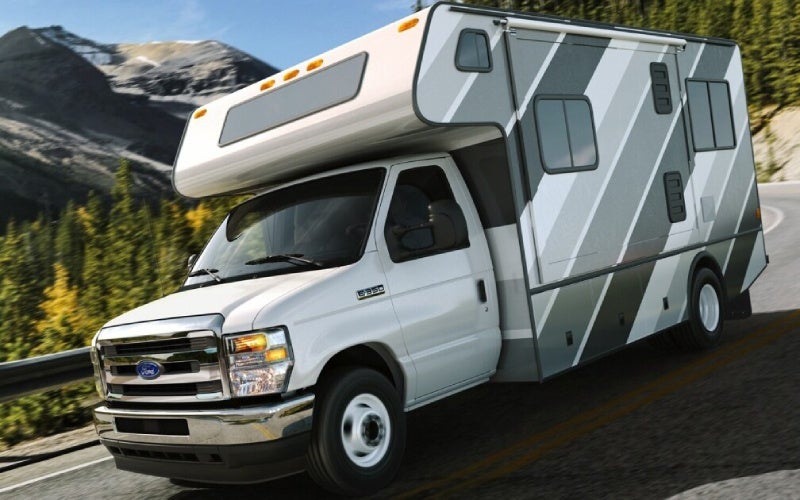
- Class C motorhome: The Ford Cutaway chassis is designed for Class C motorhome bodies and is available in a wide choice of GVWRs up to 14,500 lbs. with dual rear wheels.
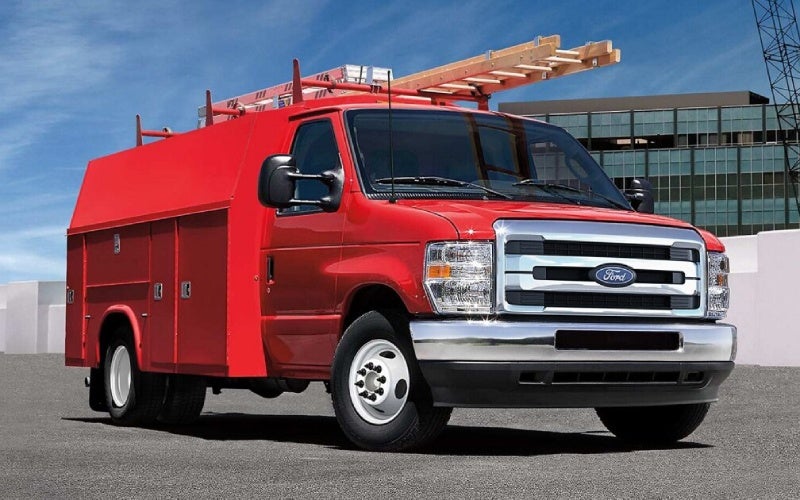
- Mobile service or delivery: A practical choice for trades, repair companies, logistics teams and businesses needing organized storage, equipment power and daily route durability.
These categories are a starting point, not a final answer. A business serving Jupiter, West Palm Beach, and Loxahatchee may need a vehicle that handles urban roads, suburban routes, airport-area traffic, business campuses and customer locations in one workday. That is why upfit planning should account for the driver’s route, parking environment, load-in process, passenger expectations and service schedule.
Why the Powertrain Matters for Upfits
The standard 7.3L V8 Gas engine is one of the key reasons the E-Series Cutaway remains a strong fit for commercial use. Ford rates the engine at 325 horsepower and 450 lb.-ft. of torque at 3,750 rpm when properly equipped. Torque is especially important for work vehicles because the finished upfit can add substantial body weight, equipment weight or passenger load. A strong low-end feel helps the vehicle move confidently from stops, merge with traffic and manage demanding duty cycles.
The Ford TorqShift® six-speed automatic transmission is designed to work with the 7.3L V8. Its Tow/Haul mode automatically compensates for altitude, grade and load conditions, and it delays transmission upshifts to help reduce gear hunting. For a loaded shuttle, service body or motorhome platform, that behavior can make driving feel more controlled and less busy. Properly equipped E-Series Cutaway models can tow up to 10,000 lbs., although maximum towing varies based on cargo, vehicle configuration, accessories and number of passengers.
Electrical Planning Can Make or Break the Build
Many modern upfits need more than a strong frame and engine. Refrigeration units, generators, warning lights, lift equipment, two-way radios, medical equipment and jobsite accessories can all place demands on the electrical system. Ford equips the 2027 E-Series with a standard heavy-duty 210-amp alternator when paired with the 7.3L V8 engine. Optional alternators include a 240-amp alternator or a dual 240/157-amp alternator combination. A standard 78 amp-hr battery is included, and dual batteries are available.
The available Vehicle Integration System 1.0 is especially helpful for businesses planning more complex equipment. Using a laptop or notebook, an upfitter can connect electrical equipment to CAN buses or ports and program switches to operate aftermarket-installed equipment, such as lift buckets, cranes, a refrigeration unit or generator with up to nine digitally configurable inputs. Four available high-capacity upfitter switches rated at 30 amp, 30 amp, 15 amp and 10 amp are factory-installed and integrated into the instrument panel, making accessory integration cleaner and more convenient.
Driver Comfort Still Counts
A commercial vehicle should support the person behind the wheel. The E-Series cab includes a tilt/telescoping steering column, a convenient cluster and finish panel, Bluetooth® radio, a dual USB port for charging and a multifunctioning console with beverage holders and storage trays. The instrument cluster can display useful business-related information, including miles-to-empty, miles traveled, average fuel economy, oil life, engine idle hours and engine hours.
This matters because driver comfort can influence productivity. A shuttle driver may spend hours in traffic. A service technician may enter and exit the cab repeatedly throughout the day. A delivery driver may rely on quick access to route information and device charging. The E-Series interior keeps the layout straightforward, which is often exactly what commercial users prefer.
How to Narrow Your Best Upfit Choice
Before finalizing a build, create a practical checklist that connects vehicle specs to real operations. A clear plan can help your dealership, upfitter and internal decision-makers move in the same direction.
- Daily mission: Identify whether the vehicle will move people, cargo, equipment or a specialized body.
- Weight planning: Estimate body weight, passenger count, tools, cargo, fluids and accessories before choosing GVWR.
- Route profile: Consider highway driving, local stops, tight parking areas, loading zones and frequent idle time.
- Electrical needs: List all equipment requiring power and review alternator, battery and switch requirements.
- Service strategy: Plan maintenance intervals, parts access and downtime management before the vehicle enters daily operation.
Al Packer Ford Royal Palm Beach can help online shoppers review these details with a Ford-focused perspective. The goal is not simply to select the largest chassis or the longest list of options. The goal is to choose the configuration that fits the job, supports the driver and gives the upfitter the right foundation.
Frequently Asked Questions:
Which E-Series Cutaway model is best for a heavy upfit?
The E-450 Dual-Rear-Wheel Cutaway is often the strongest choice for heavier applications because it offers available GVWR ratings up to 14,500 lbs. and a maximum GCWR of 22,000 lbs. However, the right model depends on the final body weight, passenger load, cargo, accessories and towing requirements.
Is the E-350 a good choice for shuttle or service use?
Yes, the E-350 can be a strong fit for many shuttle, service and delivery applications. The single-rear-wheel version supports a wide range of commercial and recreational uses, while the dual-rear-wheel version adds mid-range capacity with available GVWRs from 11,500 lbs. to 12,500 lbs.
Should I choose available upfitter switches?
Available high-capacity upfitter switches are worth considering if your build includes electrical accessories such as beacon lights, radios or other aftermarket equipment. Since the switches are factory-installed and integrated into the instrument panel, installation can be cleaner and more convenient.
Does driver-assist technology matter on a cutaway chassis?
Yes. Standard Automatic Emergency Braking, Traction Control and Electronic Stability Control can help support confidence during daily operation. Available features such as Adaptive Cruise Control, Post-Collision Braking, Automatic High-Beam Headlamps and Distance Alert can add further support, although driver-assist features remain supplemental and do not replace attentive driving.
The best E-Series Cutaway upfit is the one that makes your work easier, safer to manage and more consistent over time. By starting with the finished mission, confirming ratings, planning electrical needs and reviewing driver requirements, your business can choose a Ford chassis that becomes a dependable part of daily operations.