

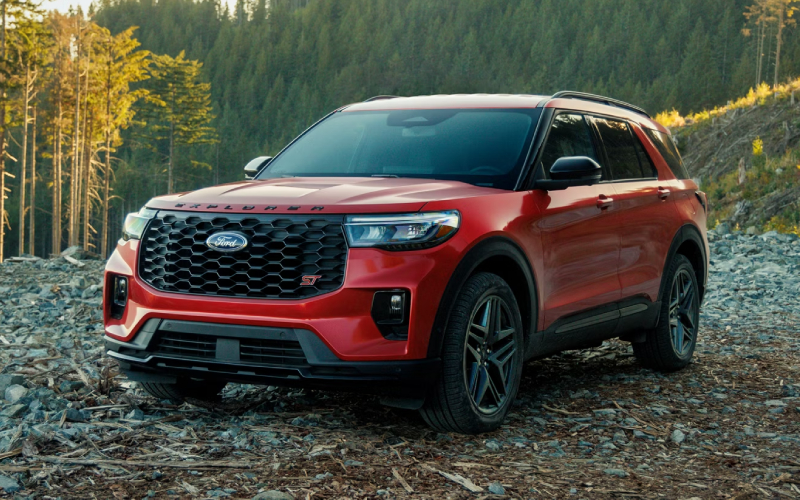
Al Packer Ford Royal Palm Beach – Which Three-Row SUV Fits Active Families in Palm Beach Gardens, FL Best — 2026 Ford Explorer or 2026 Chevrolet Traverse?
What local families ask first
When families compare the 2026 Ford Explorer and 2026 Chevrolet Traverse, one question tends to rise above the rest: which three-row SUV better balances everyday comfort with confident performance for busy routes through Palm Beach Gardens, FL? It is a fair question. Your week may include I-95 merges, PGA Boulevard errands, and weekend drives to the coast. Both SUVs are capable and well-equipped, but the Explorer’s rear-wheel-drive architecture and available 3.0L EcoBoost V6 give it a composed, confident character that keeps stress levels low in traffic and makes lane changes or ramps feel more natural. Meanwhile, Traverse counters with an impressive 17.7-inch display and best-in-class cargo capacity, so packing strollers, coolers, and sports bags is a breeze.
Here is how we guide families through this decision: list your “must-haves,” take test drives on familiar roads, and think about how you load the cabin for a typical Saturday. The Explorer’s available BlueCruise helps highway miles pass with less fatigue, while its available massaging front seats provide comfort that genuinely matters after a long day. Traverse brings available Super Cruise, a strong turbo 2.5L engine, and excellent third-row access with Smart Slide Seats. Both deliver 5,000 pounds of towing capability for a pair of jet skis or a small boat. But when you want an SUV that feels as confident as it is comfortable, the Explorer’s dynamics create a difference you can feel from the first on-ramp.
Powertrains and driving feel
Powertrain character sets the tone for how an SUV feels over years of ownership. The Explorer’s standard 2.3L EcoBoost I-4 is smooth and quick enough for daily errands, and the available 3.0L EcoBoost V6 turns it into a genuinely energetic family vehicle. That extra power brings decisive highway passing and calm confidence merging into fast-moving traffic. Traverse’s turbocharged 2.5L I-4 is strong for its class and pairs well with an 8-speed automatic; its torque helps with stop-and-go and everyday errands. Yet, because the Explorer starts with a rear-wheel-drive architecture and offers Intelligent 4WD, it tends to feel more composed when accelerating out of turns or cruising at speed. That poise is something families notice most when the cabin is full and the day is long.
Cabin comfort and family usability
Families routinely ask how these SUVs handle real-life loading and comfort. Traverse leads in sheer volume with up to 98 cu ft of cargo space and that large, vivid 17.7-inch touchscreen plus Google built-in. It is a well-designed cabin that makes organizing sports gear and beach umbrellas simple. The Explorer counters with available seating for up to seven and smart storage, but then adds premium touches: available heated, ventilated, and massaging front seats and a B&O Sound System by Bang & Olufsen. After an afternoon of youth soccer or a long commute, those features help every drive feel easier. The Explorer’s 360-Degree Camera also helps with parking near busy plazas, while available Ford Co-Pilot360 Assist+ includes Adaptive Cruise Control for smoother traffic flow.
Safety and driver assistance
Safety technology is a core consideration for families, and both SUVs deliver. The Explorer offers BlueCruise hands-free highway driving on compatible roads and a suite of driver-assist features through Ford Co-Pilot360 Assist+. Traverse offers Super Cruise with a plan included on certain trims and more than 20 standard driver assistance features through Chevy Safety Assist, including Front Pedestrian and Bicycle Braking, Blind Zone Steering Assist, and Rear Cross Traffic Braking. Both offer surround-view camera systems that simplify tight parking. Our advice is to try these features on the same route. Many families find the Explorer’s driver assistance tuning to be especially natural, particularly on longer stretches and during lane centering support.
Who should choose which?
If your week is an even split between school car line, downtown errands, and weekend moves to the beach, you will appreciate how composed the Explorer feels when full of passengers and gear. If you frequently carry bulky items and want the most cargo capacity you can get, the Traverse’s packaging is appealing. Both tow confidently and bring advanced tech to the table; the difference is how the drive itself feels and the premium touches you will notice daily.
At Al Packer Ford Royal Palm Beach, serving Loxahatchee, Palm Beach Gardens, and Lake Worth Beach, we walk families through side-by-side test drives and guided feature demos so you can decide with clarity.
Key takeaways
- Driving character: Explorer’s rear-wheel-drive platform and available 3.0L EcoBoost V6 create composed, confident performance; Traverse’s turbo 2.5L is strong and easygoing.
- Cabin experience: Explorer offers available massaging seats and B&O audio; Traverse features best-in-class cargo and a 17.7-inch display with Google built-in.
- Driver assistance: Explorer offers BlueCruise; Traverse offers Super Cruise, and both provide robust active safety suites and available surround-view cameras.
Frequently Asked Questions:
Do both SUVs offer hands-free highway driving?
Yes. The Explorer offers BlueCruise on compatible highways, while the Traverse offers Super Cruise on supported trims. Both systems assist with acceleration, braking, and steering when conditions permit and require your attention on the road.
Which SUV has more cargo space?
The Traverse offers best-in-class max cargo volume at up to 98 cu ft. The Explorer provides up to 85.8 cu ft, plus useful storage solutions and an available power liftgate.
What about towing and weekend toys?
Both the Explorer and Traverse are rated to tow up to 5,000 pounds when properly equipped, covering a small boat, pair of jet skis, or a compact camper.
Which feels more comfortable on long drives?
Preferences vary, but many families prefer the Explorer’s available massaging front seats and the calm, planted feel of its rear-wheel-drive platform, especially on longer highway routes.
How can I decide between them?
Drive both on your typical routes, load the third row, and try the driver assistance features in real traffic. That side-by-side experience usually makes your ideal fit obvious.
When you are ready to compare these SUVs on familiar roads, our team can tailor a route that includes highway stretches, neighborhood turns, and a little bit of stop-and-go so you can feel the differences clearly.
Request more 2026 Ford Explorer information
Connect with us


- August 2026
- July 2026
- June 2026
- May 2026
- April 2026
- March 2026
- February 2026
- January 2026
- December 2025
- November 2025
- October 2025
- September 2025
- August 2025
- July 2025
- June 2025
- October 2024
- March 2024
- February 2024
- January 2024
- December 2023
- August 2023
- July 2023
- June 2023
- May 2023
- April 2023
- February 2023
- December 2022
- November 2022
- October 2022